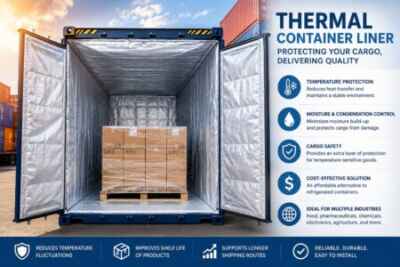
Shipping goods across long distances can expose products to changing temperatures, humidity, and environmental conditions. For businesses that transport temperature-sensitive items, maintaining product quality during transit is one of the biggest challenges. This is where a Thermal Container Liner becomes an important solution.
A thermal container liner is designed to create an additional protective layer inside a shipping container. It helps control temperature changes, reduce heat transfer, and protect cargo from extreme weather conditions. Whether goods are transported by sea, road, or rail, a thermal liner provides better protection against temperature fluctuations.
Industries that depend on food, pharmaceuticals, chemicals, electronics, and other sensitive products often use thermal container liners to maintain product safety and quality throughout the supply chain.
What Is a Thermal Container Liner?
A Thermal Container Liner is an insulated covering installed inside a shipping container to provide temperature protection for the cargo. It works by reducing the impact of outside temperatures entering the container, creating a more stable environment for stored products.
Unlike traditional shipping containers that are mainly designed for strength and security, standard containers do not provide sufficient temperature control. A thermal liner adds insulation materials that help slow down heat transfer between the outside environment and the products inside.
Thermal liners are commonly made from materials such as reflective films, insulated fabrics, foam layers, and other heat-resistant materials. The design depends on the type of cargo, transportation conditions, and required temperature range.
How Does a Thermal Liner Work?
A thermal liner works by creating a barrier between the external environment and the cargo space. During hot weather, it helps reduce heat entering the container, while in colder conditions, it helps retain internal warmth.
The main functions of a thermal liner include:
-
Reducing temperature fluctuations
-
Protecting products from extreme heat and cold
-
Minimizing condensation risks
-
Supporting better product shelf life
-
Maintaining stable shipping conditions
The liner does not actively cool or heat the container like a refrigeration system. Instead, it provides insulation that slows down temperature changes. This makes it a practical solution for products that require protection but do not always need refrigerated transportation.
Benefits of Using Thermal Liner for Shipping Containers
A Thermal Liner for Shipping Containers offers several advantages for companies involved in global transportation.
Protects Temperature-Sensitive Products
Many products can lose quality when exposed to unsuitable temperatures. A thermal liner helps protect sensitive cargo from heat damage, freezing conditions, and sudden temperature changes during transportation.
Reduces Product Loss
Temperature-related damage can result in financial losses, rejected shipments, and customer dissatisfaction. Thermal liners provide an extra level of protection that helps reduce these risks.
Cost-Effective Alternative
Not every shipment requires expensive refrigerated containers. For products that only need temperature buffering, thermal liners can offer a more affordable option while still providing reliable protection.
Supports Longer Shipping Routes
International shipments may spend weeks at sea or in storage areas where temperatures can change significantly. Thermal liners help maintain a safer environment throughout long transportation periods.
Thermal Container Liner Installation
Proper Thermal Container Liner Installation plays an important role in achieving maximum performance. A poorly installed liner may leave gaps that reduce insulation effectiveness.
The installation process usually involves:
-
Preparing the container by cleaning the internal surfaces.
-
Measuring the container dimensions to ensure proper liner fitting.
-
Installing the liner panels or covering system.
-
Securing the liner to prevent movement during transportation.
-
Checking for gaps, openings, or installation issues.
Professional installation ensures that the thermal liner fits correctly and provides consistent protection. Many companies offer a comprehensive set of services, including liner supply, installation support, custom designs, and technical guidance based on cargo requirements.
Types of Thermal Liners
Different shipping requirements need different types of insulation solutions. Some common thermal liner options include:
Reflective Thermal Liners
These liners use reflective materials to reduce heat absorption from sunlight. They are often used for shipments exposed to high temperatures.
Insulated Fabric Liners
Fabric-based thermal liners provide flexibility and durability. They are suitable for various cargo types and transportation conditions.
Multi-Layer Thermal Liners
Multi-layer designs combine different insulation materials to provide stronger temperature protection. These are commonly used for sensitive products requiring additional protection.
Thermal Container Liners by Industry
Different industries rely on thermal container liners to protect their products during transportation.
Food and Beverage Industry
Food products such as chocolate, dairy items, fruits, vegetables, and beverages can be affected by temperature changes. Thermal liners help maintain quality and reduce spoilage during shipping.
Pharmaceutical Industry
Medicines, vaccines, and healthcare products often require controlled transportation conditions. Thermal liners provide additional protection when maintaining product stability is critical.
Chemical Industry
Some chemicals require protection from extreme temperatures to maintain their properties. Thermal liners help create safer shipping conditions for these materials.
Electronics Industry
Electronic equipment can be damaged by heat and moisture. Thermal liners help reduce exposure to temperature changes and condensation.
Agricultural Industry
Seeds, plants, and agricultural products often require protection during long-distance transport. Thermal liners help maintain suitable conditions from origin to destination.
Choosing the Right Thermal Liner
Selecting the correct thermal liner depends on several factors, including:
-
Type of product being shipped
-
Expected transportation duration
-
Weather conditions along the route
-
Required temperature range
-
Container size and design
Businesses should evaluate their shipping needs carefully before selecting a liner solution. A suitable thermal liner can improve cargo protection and reduce unnecessary transportation costs.
Why Businesses Choose Thermal Container Liners
Modern supply chains require reliable solutions that protect products while keeping transportation efficient. Thermal container liners services a simple and effective way to manage temperature risks without depending only on expensive temperature-controlled containers.
They help businesses maintain product quality, reduce waste, and improve customer satisfaction. As global trade continues to grow, thermal protection solutions are becoming increasingly important for industries that depend on safe and reliable shipping.
Conclusion
A Thermal Container Liner is an essential protective solution for businesses transporting temperature-sensitive goods. By reducing heat transfer and creating a more stable environment inside shipping containers, thermal liners help protect products throughout their journey.
From food and pharmaceuticals to chemicals and electronics, many industries benefit from this additional layer of protection. With proper Thermal Container Liner Installation and the right liner selection, businesses can improve shipping reliability and reduce the risks associated with temperature changes.
As supply chains become more complex, thermal liners continue to provide a practical and cost-effective method for safer global transportation.


