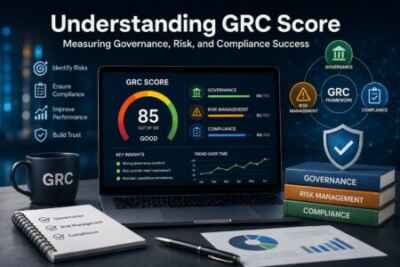
Modern organizations operate in an environment where risks, regulations, and security challenges are constantly changing. Businesses must protect sensitive information, follow industry regulations, and maintain strong internal controls to avoid financial losses and operational disruptions. Managing these areas separately can create confusion and make it difficult to understand the organization’s overall risk position.
This is where GRC governance risk and compliance practices play an important role. A structured GRC approach helps businesses connect governance strategies, risk management processes, and compliance activities under one framework.
A GRC Score provides a measurable way to understand how effectively an organization manages these responsibilities. It helps decision-makers identify weaknesses, evaluate performance, and take action to strengthen business operations. By measuring governance quality, risk exposure, and compliance effectiveness, companies can create a safer and more reliable working environment.
What Is a GRC Score?
A GRC Score is a measurement that shows how well an organization performs in governance, risk management, and compliance activities. It combines different factors, including security controls, regulatory requirements, internal policies, audit results, and risk management practices, into a single score.
The purpose of a GRC Score is not only to identify problems but also to provide a clear picture of an organization’s overall control environment. A higher score generally indicates that a company has strong processes, effective risk controls, and better compliance management. A lower score highlights areas where improvements may be required.
Unlike traditional risk assessments that focus on individual issues, a GRC Score provides a broader view of organizational health. It allows businesses to measure progress and compare performance over time.
Importance of Measuring GRC Score
Businesses face many challenges, including cybersecurity threats, regulatory changes, vendor risks, and operational failures. Without proper measurement, organizations may struggle to understand which areas require immediate attention.
A GRC Score helps companies prioritize risks based on their impact and urgency. It allows leadership teams to make informed decisions instead of relying on assumptions.
Some key benefits of measuring a GRC Score include:
-
Identifying compliance gaps before they become major problems
-
Improving risk management decisions
-
Strengthening internal controls
-
Supporting audit preparation
-
Increasing transparency across departments
-
Helping organizations meet industry standards
By regularly reviewing GRC performance, businesses can maintain better control over their operations and respond quickly to emerging risks.
How Is a GRC Score Calculated?
The calculation of a GRC Score depends on the organization’s framework, industry requirements, and business goals. Different companies may use different scoring methods, but most evaluations consider several important areas.
Common factors used to calculate a GRC Score include:
Governance Assessment
Governance focuses on how an organization creates policies, assigns responsibilities, and manages decision-making processes. A strong governance structure ensures that employees understand their roles and follow established procedures.
Risk Management Evaluation
Risk management measures how effectively a company identifies, analyzes, and controls potential threats. This includes cybersecurity risks, financial risks, operational challenges, and third-party risks.
Compliance Performance
Compliance evaluates whether an organization follows legal requirements, industry regulations, and internal standards. Strong compliance practices reduce the possibility of penalties, legal issues, and business interruptions.
Understanding GRC Risk Score
A grc risk score focuses specifically on measuring the level of risk associated with different business activities. It helps organizations understand which risks have the highest impact and require immediate action.
A GRC risk score is usually based on factors such as:
-
Probability of a risk occurring
-
Potential business impact
-
Existing security controls
-
Risk mitigation efforts
-
Compliance requirements
For example, a cybersecurity vulnerability affecting customer data may receive a higher risk score compared to a minor operational issue. This approach helps organizations focus resources on the most critical threats.
A well-designed risk scoring system allows businesses to manage risks proactively rather than responding after damage occurs.
Issue Scoring and Weighted Composite Score GRC Framework
Many organizations use an issue scoring weighted composite score GRC framework to create a more accurate measurement system.
In this method, different issues are assigned scores based on their severity, business impact, and importance. Each category receives a specific weight depending on its relevance to organizational goals.
For example:
-
Critical security risks may receive a higher weight
-
Regulatory violations may have significant impact scores
-
Minor process issues may receive lower weight
The weighted approach creates a balanced score that reflects real business priorities. Instead of treating every issue equally, organizations can focus on areas that create the greatest risk.
This framework also improves reporting because management teams can clearly understand where improvements are needed.
Role of GRC Training and Certification
Effective GRC management requires skilled professionals who understand governance practices, risk assessment methods, and compliance requirements. This is why GRC Training and Certification has become increasingly valuable for cybersecurity, audit, and compliance professionals.
Training programs help individuals learn how to:
-
Develop governance frameworks
-
Identify and evaluate risks
-
Manage compliance requirements
-
Perform audits
-
Create risk management strategies
Professionals with proper training can help organizations build stronger GRC programs and maintain better security standards.
Benefits of GRC Certification
A grc certification demonstrates that an individual has knowledge of governance, risk, and compliance principles. It can improve career opportunities and help professionals work effectively in fields such as cybersecurity, internal auditing, and regulatory compliance.
Organizations also benefit from certified professionals because they bring structured knowledge and industry best practices.
A recognized risk compliance certification can help professionals understand:
-
Regulatory frameworks
-
Risk assessment techniques
-
Compliance monitoring
-
Security governance
-
Business continuity planning
As companies continue to face complex risks, skilled GRC professionals are becoming essential for maintaining strong business protection.
Free GRC Training and Certification Options
Many beginners start their GRC journey through free GRC training and certification programs. These resources provide basic knowledge about governance, risk management, compliance frameworks, and industry practices.
Free learning options can help individuals understand fundamental concepts before investing in advanced certifications. They are especially useful for students, IT professionals, and those planning to transition into cybersecurity or compliance roles.
However, advanced certifications and professional training programs usually provide deeper knowledge, practical experience, and industry recognition.
How Organizations Can Improve Their GRC Score
Improving a GRC Score requires continuous effort and regular evaluation. Organizations should not treat GRC as a one-time activity but as an ongoing process.
Some effective ways to improve GRC performance include:
-
Regularly reviewing policies and procedures
-
Conducting risk assessments
-
Training employees on compliance responsibilities
-
Monitoring security controls
-
Updating outdated processes
-
Using automated GRC tools
A strong GRC program helps businesses create a culture where risk awareness and compliance become part of daily operations.
Conclusion
A GRC Score provides organizations with a clear understanding of their governance, risk, and compliance performance. It helps businesses measure their strengths, identify weaknesses, and make better decisions to protect their operations.
Through effective scoring methods, including an issue scoring weighted composite score GRC framework, companies can evaluate risks more accurately and focus on areas that need attention.
As regulations and security challenges continue to grow, investing in GRC knowledge, professional development, and certifications will become increasingly important. Whether through GRC Training and Certification, a professional grc certification, or beginner-friendly learning options like free GRC training and certification, developing GRC expertise helps organizations build stronger foundations for long-term success.


