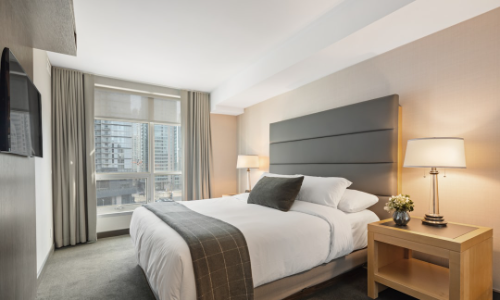
Hotel rooms need furniture that combines visual appeal, guest comfort, durability, and efficient use of space. Unlike residential furniture, hospitality furniture must withstand frequent use, regular cleaning, and changing guest requirements while maintaining a consistent appearance. Modular hotel room furniture offers a practical approach by combining standardized components with customizable configurations, allowing hotels to create coordinated guest rooms while simplifying installation, maintenance, and future upgrades. Current hospitality trends increasingly emphasize modularity, durability, technology integration, and lifecycle value.
The principles discussed in MDF vs Plywood: Which Material Is Best for Your Home Furniture? are also relevant when selecting materials for hotel furniture. Although hotel furniture has different performance requirements, the choice of board, finish, hardware, and construction method directly influences durability, maintenance, appearance, and overall project cost. For hospitality applications, material selection should be based on expected usage rather than appearance alone.
What Is Modular Hotel Room Furniture?
Modular hotel furniture consists of coordinated furniture components that can be manufactured, transported, installed, replaced, or reconfigured efficiently.
Typical guest-room components include beds, bedside tables, writing desks, wardrobes, luggage benches, TV consoles, minibars, storage cabinets, headboards, and seating.
Because components can be standardized across multiple rooms, hotels can maintain a consistent design language while simplifying procurement and installation.
Efficient Use of Guest-Room Space
Hotel rooms often need to accommodate several functions within a limited footprint. Guests may need to sleep, work, relax, store luggage, dress, and use technology within the same room.
Modular furniture can combine multiple functions into compact units. Fold-away work surfaces, integrated storage, multifunctional consoles, and luggage benches can improve space utilization without making rooms feel overcrowded.
Durable Materials for Hospitality Use
Hotel furniture experiences considerably more intensive use than typical residential furniture. Doors, drawers, work surfaces, seating, and bedside units may be used by hundreds of guests over their service life.
Manufacturers therefore need to consider durable substrates, appropriate laminates, strong edge treatments, commercial-grade hardware, and robust construction. Hospitality procurement is increasingly focused on lifecycle value rather than simply selecting the lowest initial price.
Modular Headboards
Headboards can become an important visual feature in hotel rooms while also serving practical functions.
Modular headboards can incorporate reading lights, switches, charging points, acoustic materials, shelves, and bedside surfaces. Their replaceable or sectional construction can also simplify future refurbishment.
Integrated Workstations
Many hotel guests need a comfortable place to work, even when travelling for leisure. A compact desk can therefore add significant value to a guest room.
Modular workstations can incorporate drawers, shelves, cable management, power outlets, and USB charging points. This allows hotels to provide a professional working environment without dedicating excessive floor space to a large desk.
Smart Furniture Integration
Technology is becoming an increasingly important part of hospitality furniture. Modern guest-room furniture can incorporate USB-C ports, wireless charging, integrated lighting, power outlets, and concealed cable management.
Integrating these features directly into furniture helps reduce visible wiring and provides guests with convenient access to power.
Customization for Hotel Branding
Modular furniture does not have to look identical across every property. Manufacturers can customize dimensions, finishes, colors, hardware, upholstery, and decorative details according to the hotel’s brand identity.
A boutique hotel may use distinctive textures and handcrafted accents, while a business hotel may prefer clean lines and understated finishes.
The National Council for Hotel Management and Catering Technology recommends selecting FF&E according to hotel concept, brand identity, room proportions, durability, and overall design consistency.
Easy Installation and Faster Renovation
One of the major advantages of modular furniture is efficient installation. Factory-produced components can arrive ready for assembly, reducing the amount of detailed carpentry required on site.
This can be particularly useful during hotel renovations, when minimizing room downtime is important. Modular components can also support phased refurbishment instead of requiring an entire property to be renovated simultaneously.
Maintenance and Replacement
Hotel furniture should be designed with maintenance in mind. If a drawer front, upholstery panel, tabletop, or hardware component becomes damaged, replacing that individual part can be more practical than replacing the entire furniture unit.
Modular construction can therefore support longer furniture lifecycles and more efficient maintenance.
Consistent Design Across Multiple Rooms
Hotels frequently need furniture for dozens or hundreds of rooms. Modular manufacturing can help maintain consistent dimensions, finishes, hardware, and design details across large orders.
This consistency strengthens brand presentation while simplifying procurement and installation.
Choosing a Modular Hotel Furniture Manufacturer
When selecting a manufacturer, hotel owners and procurement teams should evaluate material quality, manufacturing capacity, customization options, hospitality experience, hardware specifications, quality control, installation support, warranty, and replacement-part availability.
It is also important to assess whether the manufacturer can reproduce the same specifications consistently across large quantities.
Conclusion
Modular hotel room furniture provides hotels with a practical combination of design flexibility, durability, efficient installation, and long-term value. From modular headboards and workstations to wardrobes, bedside units, storage consoles, and integrated technology, each component can be designed to support both guest experience and hotel operations.
The strongest hospitality furniture solutions balance aesthetics with durability and serviceability. By selecting appropriate materials, modular configurations, and reliable manufacturing partners, hotels can create attractive guest rooms that remain functional through years of demanding use.


