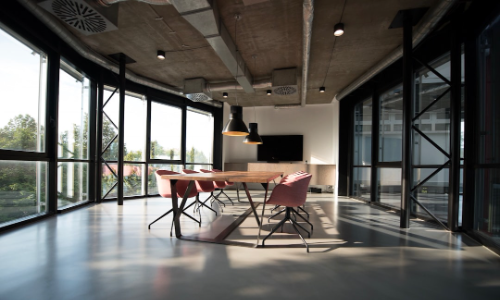
Working from home requires more than placing a desk and chair in an available corner. A thoughtfully designed home office should support concentration, organization, ergonomics, video meetings, storage, and a healthy separation between work and personal life. Home office design companies help homeowners transform spare rooms, bedrooms, living-room corners, balconies, or multifunctional areas into practical work environments. Design experts increasingly emphasize ergonomics, lighting, organization, and clear boundaries between professional and personal spaces when planning home offices.
The ideas covered in Office Interior Design Trends That Improve Productivity can be adapted effectively to residential workspaces. Flexible furniture, appropriate lighting, ergonomic seating, acoustic considerations, organized storage, and technology integration can make a home office more productive without making it feel like a conventional corporate office. The objective is to create a workspace that fits naturally into the home while supporting professional requirements.
Understanding Home Office Requirements
The first step in home office design is identifying how the space will be used.
A person who attends frequent video meetings may need a professional background and controlled lighting, while someone who primarily works on documents may require a larger desk and extensive storage. Designers can assess these requirements before determining the layout.
Choosing the Right Location
A home office does not necessarily require an independent room. A quiet corner of a bedroom, living room, hallway, or unused area beneath a staircase can sometimes become an effective workspace.
The location should ideally offer sufficient natural light, limited distractions, convenient electrical access, and enough space for comfortable movement.
Ergonomic Furniture
A comfortable chair and appropriately sized desk are fundamental to a productive home office.
The desk should provide adequate legroom and enough surface area for a computer, monitor, documents, and other essential items. An ergonomic chair should provide suitable support and allow adjustments according to the user’s height and working position.
Natural and Artificial Lighting
Lighting has a significant effect on the usability of a home office. Natural light can make the workspace more pleasant, while task lighting can reduce shadows during detailed work.
Designers can combine ceiling fixtures, desk lamps, wall lights, and indirect lighting depending on the room and work requirements.
Smart Storage Solutions
Clutter can quickly reduce the efficiency of a workspace. Home office designers can integrate drawers, shelves, cabinets, overhead storage, and concealed compartments to keep documents and equipment organized.
Built-in storage can be particularly useful when the office occupies part of another room because it helps maintain a clean appearance when work is finished.
Integrated Workstations
An integrated workstation can combine a desk, storage, shelving, and display areas into one coordinated unit.
For compact homes, a wall-mounted desk or wardrobe-integrated workstation can provide a dedicated workspace without consuming the floor area required by a conventional office setup.
Technology Integration
Modern home offices often require several electrical and connectivity points. Computers, monitors, printers, chargers, routers, lamps, and other equipment need convenient access to power.
Cable-management systems can keep wires organized and prevent the workspace from appearing cluttered. Wireless charging and strategically positioned sockets can further improve convenience.
Acoustic Comfort
Noise can be a major challenge when working from home. A workspace near a television, kitchen, or frequently used living area may create distractions.
Designers can use rugs, curtains, upholstered furniture, bookshelves, acoustic panels, and appropriate room positioning to reduce unwanted noise. Where possible, a dedicated room with a closing door provides stronger separation.
Creating a Professional Video-Call Background
Video meetings have made the visual background an important part of home-office design.
A simple bookshelf, textured wall, artwork, plants, or carefully selected storage unit can create a professional backdrop. The background should remain organized without becoming visually distracting.
Flexible and Multifunctional Design
A home office may need to serve another purpose when work is finished. A guest bedroom, for example, can incorporate a fold-down desk that closes when the room is needed for visitors.
Similarly, a study unit can be integrated into a living room or bedroom without making the entire space look like an office.
Bringing Productivity Into the Design
The best home office is designed around the user’s working habits. A well-organized layout can minimize distractions, improve accessibility, and create clearer boundaries between work and relaxation.
Architectural Digest India notes that a well-designed home office can support productivity, wellbeing, reduced distractions, and clearer work-life boundaries.
Choosing Home Office Design Companies
When evaluating home office design companies, homeowners should examine portfolios, space-planning capabilities, furniture customization, material options, lighting knowledge, electrical coordination, storage solutions, project management, and installation services.
It is useful to discuss the expected working hours, equipment requirements, storage needs, preferred aesthetic, and available room dimensions before finalizing a design.
Conclusion
Home office design companies can transform underused residential spaces into comfortable, organized, and productive work environments. Ergonomic furniture, effective lighting, integrated storage, technology planning, acoustic comfort, and flexible layouts can make working from home significantly easier.
A successful home office does not need to occupy an entire room or follow a corporate aesthetic. With thoughtful planning, even a compact corner can become a professional workspace that supports productivity while remaining visually connected to the home.


