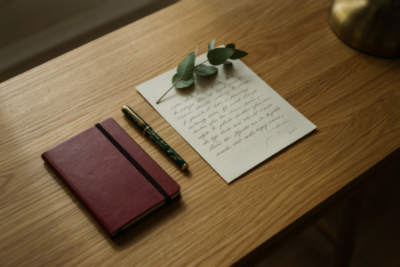
Most of what we communicate today happens on a screen. Texts, emails, quick voice notes, all of it moves fast and disappears just as quickly. Yet somehow, a handwritten note still carries a different kind of weight. It feels slower, more considered, and more like it actually came from a person. Part of that comes from the words themselves, but part of it also comes from the tools involved. The pen someone chooses, the paper they write on, even the space where they sit down to write, all shape the experience in small but real ways. The Galison Liberty Tanjore Gardens Boxed Pen is a good example of this idea in action. It is not the writing itself that makes the moment personal, but a well-designed pen can still add a sense of care and intention to something as ordinary as jotting down a note.
Why Handwriting Still Feels Different
There is something about handwriting that typing simply cannot replicate. When you type a message, your fingers move quickly and the words appear instantly, often without much thought behind the process. Handwriting asks for more from you. It takes physical effort, a bit of patience, and a level of attention that a keyboard does not require.
Every person’s handwriting also looks different. No two people form their letters the same way, which means a handwritten note is automatically unique to the person who wrote it. That individuality is part of why receiving a handwritten card or letter feels different from getting a text. It is not just information being passed along. It is a small piece of someone’s personal style, shared directly with you.
This slower pace also changes how people think while they write. Since handwriting takes more time than typing, people often choose their words more carefully. That extra bit of deliberation is part of what makes the final result feel more genuine and more personal.
The Small Details Behind a Personal Writing Experience
A lot of what makes writing feel enjoyable comes down to small, almost invisible details. The texture of the paper, the smoothness of the ink, the weight of the pen in your hand, all of these things quietly shape how the experience feels.
Some people prefer thicker paper that has a bit of texture under the pen. Others care more about how easily the ink flows, since a pen that skips or drags can interrupt the rhythm of writing. Even the environment matters. Writing at a cluttered desk feels different from writing in a quiet corner with good light and a bit of space to think.
None of these details are essential on their own. You can write a meaningful note with any pen and any piece of paper. But when these small elements come together in a thoughtful way, writing starts to feel less like a chore and more like something worth doing.
When a Pen Becomes More Than a Writing Tool
For some people, a pen eventually becomes part of a daily routine rather than just an object used occasionally. It might sit on a desk next to a favorite notebook, get pulled out for journaling, or become the go to choice for writing cards and letters to friends and family.
Over time, a pen like this can take on a bit of personal meaning. It becomes associated with certain habits, like morning journaling or writing thank you notes after a gathering. This does not mean every decorative or well-designed pen automatically creates a better writing experience. A pen is still just a tool. But for people who already enjoy writing by hand, a pen with character can make that habit feel a little more enjoyable to return to.
How the Galison Liberty Tanjore Gardens Boxed Pen Fits In
The Galison Liberty Tanjore Gardens Boxed Pen fits naturally into this broader idea of personal stationery. Its patterned design, inspired by botanical artwork, gives it a distinct visual identity that sets it apart from a plain, everyday pen. For someone who already appreciates writing by hand, having a pen that looks and feels a bit more considered can make an ordinary writing moment feel more intentional.
This is not about claiming that the pen changes how well someone writes or guarantees a better experience. It simply reflects a broader truth about stationery in general. When an item has been designed with visual care, using it can feel more like a small, enjoyable ritual rather than a purely functional task. A boxed pen like this one becomes part of that ritual, especially when it is kept somewhere visible, like a desk or a writing tray, rather than tucked away in a drawer.
The Appeal of Beautiful Stationery

There is a reason stationery with attractive patterns, colors, and illustrations continues to appeal to so many people. Beautiful stationery turns a functional item into something that also reflects personality. A notebook with an interesting cover, a card with a unique illustration, or a pen with a distinctive pattern says something about the person who chose it.
This appeal is not really about the writing tools being more effective. It is about how they make everyday tasks feel a little more enjoyable. Choosing stationery that reflects your taste, whether that means bold colors, soft patterns, or classic simplicity, is a small way of expressing yourself through objects you use often. Over time, these small visual choices add character to routines that might otherwise feel purely practical.
Writing as a More Intentional Habit
Handwritten journaling, letters, thank you notes, quick lists, and even small sketches all offer a chance to slow down. In a day filled with fast digital communication, these moments of handwriting create a kind of pause.
Writing by hand encourages a different pace of thinking. Because it takes longer than typing, people often reflect more on what they want to say before they say it. This is part of why journaling remains a popular habit for so many people. It is not just about recording events, but about taking a few quiet minutes to process thoughts in a more deliberate way.
Personal letters and thank you notes carry a similar quality. They ask the writer to slow down and think specifically about the person receiving them, which naturally makes the message feel more thoughtful than a quick text.
Small Ways to Make Writing More Personal
Making everyday writing feel more personal does not require major changes. A few small habits can make a noticeable difference over time.
- Choose stationery that reflects your personal style, whether simple or decorative
- Keep a favorite pen nearby so it becomes part of your routine
- Write personal notes occasionally instead of always sending a text
- Add a handwritten note or detail to gifts
- Maintain a journal, even if entries are short
- Use handwritten cards for birthdays, holidays, or special occasions
- Set up a small dedicated space for writing, even if it is just a corner of a desk
None of these steps require expensive tools. They are simply small, intentional choices that bring a bit more personality into everyday writing.
Why Presentation Matters With Everyday Objects
Presentation has a way of changing how we perceive ordinary items. A product that arrives in thoughtful packaging often feels more considered than one that does not, even if the core function is exactly the same. This is true for stationery just as much as it is for other everyday goods.
Businesses understand this too, which is why so much attention goes into how products are presented. Services like custom packaging allow companies to shape how an item feels before it is even used, turning a simple box into part of the overall experience. The same principle applies to a boxed pen. The packaging itself becomes part of the moment of opening and using the item, adding a small sense of occasion to something that might otherwise be entirely functional.
This does not mean packaging changes the quality of a product. It simply shows how presentation can shift the way an object is perceived and enjoyed.
Making Everyday Writing Feel Like Your Own
At its core, personal writing is about the small choices people make along the way. The pen someone picks, the notebook they return to, the moments they choose to write instead of type, all of these details add up to something that feels distinctly their own.
Personalizing your writing habits does not require expensive stationery or a complicated setup. It can be as simple as choosing a pen you enjoy using, setting aside a few minutes for a journal entry, or writing a note by hand instead of sending a message. These small decisions, repeated over time, are what make everyday writing feel connected to who you are.
Conclusion
In a world where most communication happens instantly and digitally, handwritten writing still holds a different kind of value. It slows things down and adds a personal touch that typing rarely matches. Much of that personal feeling comes from small details, including the paper people choose, the space they write in, and the tools they keep nearby. A pen like the Galison Liberty Tanjore Gardens Boxed Pen shows how thoughtful design can add a bit of character to an everyday writing moment. In the end, though, what makes writing meaningful is not the tool itself, but the care and attention someone brings to the words they choose to put down.


