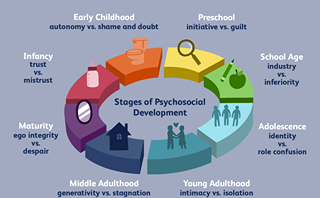
Understanding human development is a complex but fascinating endeavor, and Erik Erikson’s theory of psychosocial development provides a comprehensive blueprint for navigating this journey. Erikson’s framework consists of eight stages, each of which represents a critical period in an individual’s life when they face specific challenges that shape their psychological growth. Central to this theory is the notion that each stage builds on the previous one and creates a cumulative effect on overall development. For example, Erikson’s fourth stage of psychosocial development focuses on the balance between industry and inferiority, which is essential to building a sense of competence in children.
Stage 1: Trust Vs. Distrust (0–1 year)
The first stage, which lasts from birth to about one year, is focused on developing confidence. During this period, infants rely on their caregivers for nourishment and comfort. Consistent and reliable care leads to the development of trust, on the contrary, inconsistent care can result in mistrust. Successfully managing this phase leads to a sense of security and a foundation for future relationships.
Stage 2: Autonomy Vs. Shame and Doubt (1-3 years)
As children begin to explore their environment and assert their independence, they enter the second stage. Autonomy is promoted when caregivers provide a supportive environment that allows children to make decisions and control their actions. Conversely, overly restrictive or critical caregivers can evoke feelings of shame and doubt. Mastering this stage leads to a sense of autonomy and confidence in one’s own abilities.
Stage 3: Initiative vs. guilt (3–6 years)
During the preschool years, children begin to initiate activities, interact with peers, and engage in imaginative play. This stage involves balancing the urge to take initiative with the risk of experiencing guilt for overstepping boundaries. A supportive environment that encourages initiative while providing appropriate limits helps children develop a sense of purpose and leadership.
Stage 4: Industry Vs. inferiority (6–12 years)
Erikson’s fourth stage of psychosocial development focuses on the conflict between industry and inferiority. During the school years, children strive to acquire new skills and knowledge and seek validation from peers and adults. Success at this stage leads to a sense of industry and competence, while repeated failures or lack of encouragement can result in feelings of inferiority. This stage is crucial for building a foundation of self-confidence and motivation.
Stage 5: Identity Swapping Vs. role (ages 12–18)
Adolescence is marked by the search for identity. Adolescents explore different roles, beliefs, and values to create a personal identity. Success at this stage leads to a strong sense of self and direction, while failure can lead to role confusion and uncertainty about one’s place in society. Supportive environments that allow exploration and self-expression are vital to healthy identity formation.
Stage 6: Intimacy Vs. isolation (18–40 years)
Young adults focus on building intimate, loving relationships. Success at this stage involves making deep connections with others while maintaining a secure sense of self. Not making these connections can lead to feelings of isolation and loneliness. Healthy relationships require a balance of intimacy and independence that allows individuals to thrive both personally and professionally.
Stage 7: Generativity Vs. stagnation (40–65 years)
During middle adulthood, individuals strive to contribute to society and the next generation. This phase focuses on generativity, the desire to create or care for things that outlive themselves. Success leads to a sense of purpose and fulfillment, while failure can result in stagnation and a sense of unproductiveness. Engaging in meaningful activities such as parenting, career achievements, and community involvement is critical to successfully navigating this stage.
Stage 8: Integrity Vs. Despair (65 and older)
In the final stage of life, individuals reflect on their past experiences and achievements. A sense of integrity arises from a life well lived, leading to feelings of contentment and wisdom. Conversely, despair can result from regret and a sense of missed opportunity. Successfully achieving integrity means coming to terms with your life, accepting it as a whole, and finding peace in its wholeness.
Erikson’s eight stages of development offer a valuable framework for understanding psychological growth and the challenges we face throughout life. Each stage presents unique opportunities for personal development, and successfully navigating these stages contributes to a well-rounded and fulfilled individual. By recognizing and supporting these developmental milestones, caregivers, educators, and society as a whole can foster healthier, more resilient individuals equipped to handle life’s complexities.


