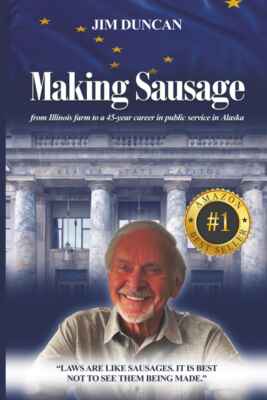
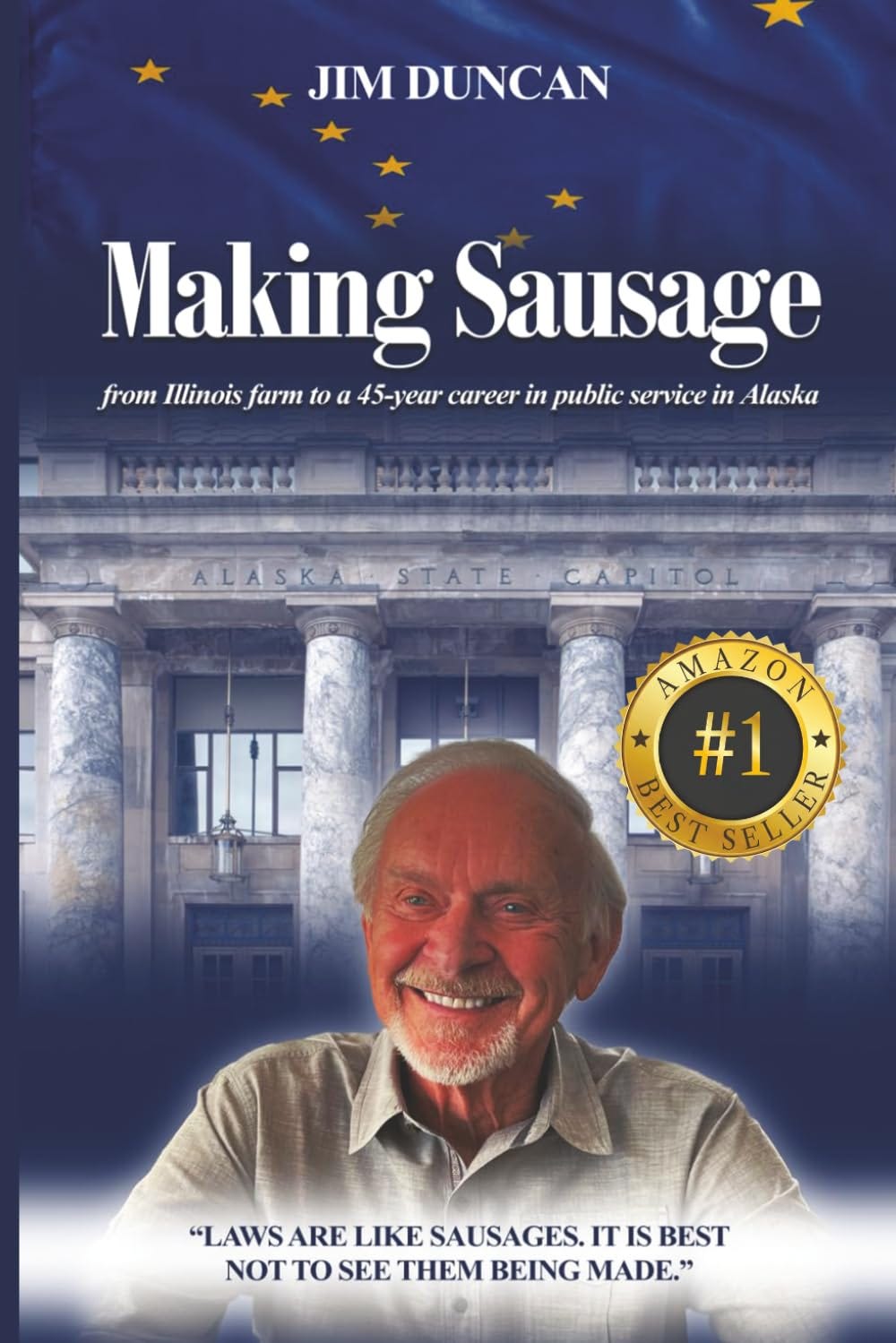
In Making Sausage: From Illinois Farm to a 45-Year Career in Public Service in Alaska, Jim Duncan explains that his career in government did not begin because he planned to become a
politician. Instead, it began with involvement in his local community and a belief that citizens should take an active role in addressing public concerns. Long before he served in the Alaska Legislature, Duncan believed that meaningful public service starts with people who are willing to participate in improving their communities.
Throughout the opening chapters of the memoir, Duncan describes how everyday experiences in Juneau gradually led him toward elected office. His story shows that community involvement, rather than political ambition, became the foundation of his forty-five years of public service.
A Concern That Could Not Be Ignored
Jim Duncan traces the beginning of his political journey to an experience in Juneau during the summer of 1971.
He had gone to the Baranof Hotel hoping to see U.S. Senator Hubert Humphrey, who was visiting the city to speak at a Democratic Party luncheon. Since he could not afford a ticket, Duncan waited in the hotel lobby, hoping to greet the Senator or take a photograph.
Instead, he was approached by a Juneau police officer, questioned about why he was there, searched, and instructed to leave the hotel because of his appearance.
Duncan explains that this experience caused him to question whether others had experienced similar treatment. At the same time, he makes it clear that he respected the Juneau Police Department and appreciated the important work officers performed in protecting the community. His concern centered on policies that he believed deserved public discussion.
Looking back, he identifies this experience as one of the moments that encouraged him to become involved in public service.
Becoming Active in the Community
Rather than limiting himself to criticism, Jim Duncan became more active in community organizations.
As President of the Capital Jaycees, he encouraged residents to participate in solving local problems. In an editorial published in the Juneau Empire, he wrote that improving a community requires insight to recognize problems, courage to take action, enthusiasm to give personal time, and belief that solutions can be found.
Duncan explains that after writing those words, he realized he should follow the same advice himself.
This decision marked an important step toward public service, as he moved from discussing community issues to becoming personally involved in addressing them.
Buy This book at Amazon
His First Campaign
In October 1971, Jim Duncan filed as a candidate for the Juneau Assembly.
It was his first campaign for elected office, and he openly admits that he had little experience organizing a political campaign. His message focused on the issues that had motivated him to run, particularly concerns about police policies and the need for the Assembly to respond more actively to the concerns of Juneau residents.
Although Duncan developed a dedicated group of supporters, he was not elected.
Instead of viewing the election as a failure, he considered it an important learning experience. His willingness to continue serving after defeat became one of the qualities that defined his approach to public service.
An Unexpected Opportunity
Only a few months after the election, an unexpected opportunity changed the course of Jim Duncan’s life.
When Assembly member Robert Thomas resigned in June 1972, the City and Borough of Juneau Assembly needed to appoint someone to complete the vacant term. Assembly member Hunt Gruening contacted Duncan about accepting the appointment.
Although Duncan expressed concern that some people viewed him as anti-establishment because of the issues he had raised during his campaign, Gruening assured him that sufficient support existed.
On July 6, 1972, Jim Duncan was appointed to the Juneau Assembly.
This appointment marked the beginning of his official public service, a career that would continue for the next forty-five years.
Serving the Juneau Community
During his time on the Assembly, Duncan quickly discovered that local government involved far more than the issues that first brought him into politics.
He participated in discussions involving community services, budgeting, public safety, and projects important to Juneau residents, including the development of what became Eaglecrest Ski Area.
These experiences broadened his understanding of public service and confirmed that working with others to solve community problems was both rewarding and meaningful.
By the time his Assembly term ended, Duncan had decided to seek election to the Alaska House of Representatives, believing he could continue serving both Juneau and the state.
Lessons About Community Involvement
Throughout Making Sausage, Jim Duncan shares several ideas that explain why community involvement mattered so much to him:
- Listen to the concerns of your community.
- Become involved rather than remaining on the sidelines.
- Accept responsibility for helping solve public problems.
- Learn from both success and disappointment.
- Continue serving whenever the opportunity arises.
These lessons became the foundation of his lifelong commitment to public service.
Conclusion
Jim Duncan’s memoir shows that meaningful public service often begins long before holding elected office. His journey started with community involvement, a willingness to address local concerns, and the decision to become personally involved in improving the place where he lived.
Through Making Sausage, Duncan demonstrates that leadership grows from participation rather than position. His experiences in Juneau laid the foundation for forty-five years of public service, reminding readers that lasting contributions often begin when ordinary citizens choose to become active in their communities.


