Dubai has become one of the most attractive destinations for entrepreneurs, investors, and multinational corporations looking to expand into international markets. One of the most important decisions business owners face when entering the UAE market is choosing the right company structure.
Among the most popular options are DIFC and mainland company formation. Understanding the differences between these two structures is essential for selecting the setup that aligns with your business goals, industry requirements, and expansion plans.
In this guide, we compare DIFC vs mainland company setup to help investors determine which option is better for their business in Dubai.
Table of Contents
ToggleUnderstanding DIFC Company Setup
The Dubai International Financial Centre (DIFC) is a globally recognized financial free zone designed primarily for businesses operating in financial services, fintech, consulting, wealth management, insurance, and related sectors.
DIFC operates under its own independent legal and regulatory framework based on English common law and is regulated by the Dubai Financial Services Authority (DFSA).
DIFC is especially attractive for international financial institutions and companies seeking a highly regulated business environment.
Understanding Mainland Company Setup
A mainland company is licensed by Dubai’s Department of Economy and Tourism (DET) and allows businesses to operate directly across the UAE market without geographical restrictions.
Mainland businesses can conduct trade throughout Dubai and the UAE, work with government entities, and open offices anywhere in the country.
Mainland company formation is suitable for businesses in sectors such as:
- Retail
- Construction
- Real estate
- Hospitality
- Trading
- Manufacturing
- Professional services
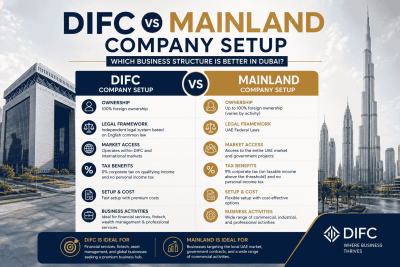
DIFC vs Mainland Company Setup: Key Differences
1. Business Activities and Industry Focus
One of the main differences between DIFC vs mainland company setup is the type of business activities allowed.
DIFC is primarily designed for:
- Financial institutions
- Fintech startups
- Investment firms
- Insurance companies
- Wealth management businesses
- Professional consultancy firms
Meanwhile, mainland companies can operate across a broader range of industries, including commercial trading, retail, logistics, and industrial sectors.
Businesses should choose the structure that best aligns with their operational activities.
2. Legal and Regulatory Framework
DIFC operates under an independent legal system based on English common law. Companies within DIFC are regulated by the DFSA, which follows internationally recognized compliance standards.
This makes DIFC highly attractive for businesses requiring strong regulatory oversight and international legal familiarity.
Mainland companies, on the other hand, operate under UAE federal commercial laws and local regulations governed by the Department of Economy and Tourism.
For financial businesses, DIFC often provides greater legal transparency and investor confidence.
3. Ownership Structure
Another important consideration in DIFC vs mainland company setup is ownership.
DIFC allows:
- 100% foreign ownership
- Full repatriation of profits and capital
- No requirement for a local shareholder
Mainland company regulations have also evolved significantly, and many business activities now allow 100% foreign ownership depending on the sector.
However, ownership rules may vary based on business activity and licensing requirements in mainland Dubai.
4. Business Location and Market Access
Mainland companies can operate freely throughout Dubai and across the UAE market without restrictions.
This makes mainland setup ideal for businesses targeting local UAE customers, retail operations, and government contracts.
DIFC companies mainly operate within the financial free zone ecosystem and international markets. While they can serve clients globally, some commercial activities outside the free zone may require additional approvals or structures.
Businesses focused on regional financial services and international clients may benefit more from DIFC.
5. Licensing and Compliance Requirements
DIFC licensing involves stricter compliance and regulatory obligations, especially for financial institutions regulated by the DFSA.
This includes:
- Detailed regulatory approvals
- Corporate governance requirements
- Financial reporting obligations
- Anti-money laundering compliance
Mainland company formation is generally simpler for non-financial business activities and may involve fewer regulatory complexities depending on the sector.
Businesses should evaluate their operational needs and compliance capabilities before choosing a structure.
6. Tax and Financial Advantages
Both DIFC and mainland businesses benefit from the UAE’s investor-friendly tax environment.
DIFC offers several financial advantages, including:
- No personal income tax
- Full repatriation of profits
- Access to international financial networks
- Strong investor protection
Mainland businesses also enjoy favorable tax conditions while benefiting from unrestricted access to local UAE markets.
The ideal structure depends on whether the business prioritizes international financial operations or direct UAE commercial access.
7. Cost of Company Formation
In general, DIFC company formation can involve higher setup and operational costs due to premium office requirements, licensing fees, and regulatory compliance obligations.
Mainland company setup costs vary depending on the business activity, office location, and license type, but may be more flexible for small and medium-sized enterprises.
Businesses should compare setup expenses, long-term operational costs, and expected business growth before making a decision.
Which Business Structure Is Better?
When comparing DIFC vs mainland company setup, there is no single solution that fits every business.
DIFC is ideal for:
- Financial institutions
- Fintech startups
- Investment firms
- International consultancy businesses
- Companies seeking strong regulatory frameworks
Mainland setup is ideal for:
- Retail businesses
- Trading companies
- Construction firms
- Hospitality businesses
- Companies targeting the local UAE market
The right choice depends on your industry, expansion goals, regulatory needs, and target customer base.
Final Thoughts
Choosing between DIFC vs mainland company setup is a critical decision for entrepreneurs and investors entering the Dubai market. DIFC offers a globally recognized financial ecosystem with strong legal protections and international credibility, while mainland setup provides unrestricted access to the UAE market and broader business opportunities.
Understanding the differences between these structures helps businesses make informed decisions that support long-term growth and operational success.
Companies seeking professional guidance for DIFC or mainland company formation can get expert support from Dubai Business And Tax Advisors for business setup, licensing, compliance, and expansion services in Dubai.


