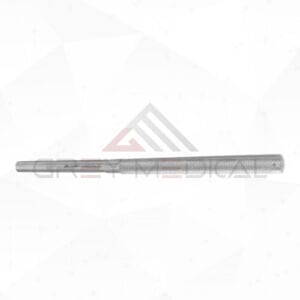

Welcome to Grey Medical, your trusted partner in premium-quality surgical instruments. With decades of experience in the medical industry, we pride ourselves on delivering precision-crafted tools designed to meet the rigorous demands of surgeons, doctors, and medical professionals worldwide. In modern orthopedic and reconstructive procedures, achieving optimal structural alignment and graft stability requires specialized tools capable of controlled force application. Among these essential devices, the bone tamp instrument stands out as a foundational component in surgical trays across the globe. Designed specifically to compact, shape, and position bone grafts or fracture fragments without causing unintended collateral trauma, this device bridges the gap between surgical strength and delicate tactile control. Understanding its anatomical design, clinical utility, and material standards highlights why surgical teams rely on superior instrumentation for predictable patient outcomes.
Anatomical Design and Ergonomic Construction
A high-performance bone tamp instrument is engineered with careful attention to balance, weight distribution, and tip geometry. Typically constructed as a single-piece solid shaft, the device features a sturdy handle at the proximal end that tapers into a slender cylindrical or rectangular neck, terminating in a flat, serrated, or contoured working tip. The handle is frequently knurled, fluted, or contoured to provide a secure, non-slip grip even when surgical gloves are exposed to fluids. At the distal end, the striking platform is reinforced to absorb repeated impacts from a surgical mallet without mushrooming, splintering, or deforming. Meanwhile, the working tip varies in diameter and surface texture—ranging from smooth flat faces to cross-hatched or cupped profiles—allowing surgeons to match the tool precisely to the density and contour of the target osseous tissue.
Primary Clinical Applications in Orthopedic Procedures
The versatility of the bone tamp instrument makes it indispensable across a broad spectrum of orthopedic, spinal, and maxillofacial surgeries. During joint arthroplasty, spinal fusion, and complex trauma reconstruction, surgeons frequently utilize autologous or synthetic friedman bone rongeur grafts to fill osseous voids and promote biological union. This specialized tool allows the clinician to gently pack morselized bone graft material tightly into medullary canals, acetabular defects, or interbody cages, eliminating air pockets that could otherwise compromise structural integrity. Beyond graft compaction, the instrument is routinely employed to elevate and realign depressed articular fracture fragments, such as those encountered in tibial plateau or calcaneal fractures, restoring smooth joint congruity before internal fixation plates and screws are applied.
Enhancing Tactile Feedback and Surgical Precision
Successful bone manipulation depends heavily on the surgeon’s ability to feel subtle changes in tissue resistance during impaction. Unlike powered surgical equipment, a manual bone tamp instrument transmits direct acoustic and tactile feedback from the distal tip straight to the clinician’s hand. As cancellous or cortical bone compresses beneath controlled mallet strikes, the pitch of the impact sound and the sensation of resistance shift noticeably, signaling when optimal density has been achieved. This immediate sensory information prevents over-compaction, which could crush delicate trabecular architecture or propagate microfractures into adjacent healthy bone. By offering measured, incremental force delivery, the device safeguards surrounding neurovascular structures while ensuring that implants and grafts sit flush against prepared osseous beds.
Material Excellence and Sterilization Durability
Because surgical impactors endure significant mechanical stress alongside harsh chemical and thermal reprocessing cycles, metallurgical quality is paramount. Premium instruments are forged from medical-grade German stainless steel, prized for its exceptional tensile strength, hardness, and natural resistance to pitting and corrosion. Advanced heat-treatment processes further refine the grain structure of the alloy, ensuring the shaft resists bending under eccentric loads while maintaining surface integrity at the striking cap. Furthermore, a satin or matte finish is commonly applied to minimize distracting glare beneath bright operating room lights. Properly manufactured instruments withstand repeated ultrasonic cleaning and high-temperature steam autoclaving without losing dimensional accuracy, guaranteeing consistent performance across thousands of surgical procedures.
Selecting the Appropriate Configuration for Surgical Needs
Choosing the right bone tamp instrument requires careful evaluation of the anatomical site, approach angle, and graft volume involved in a given procedure. Deep surgical corridors, such as those encountered in posterior lumbar interbody fusion or hip revision surgery, demand extended shaft lengths and angled or bayonet profiles that keep the surgeon’s hands clear of the line of sight. Conversely, small-bone procedures in hand, foot, or craniofacial surgery benefit from compact, lightweight models with fine tips measuring only a few millimeters across. Surgical facilities often maintain comprehensive sets containing graduated tip diameters and varied shaft geometries so operating teams can adapt seamlessly to intraoperative findings and patient-specific anatomical variations.
Conclusion
Ultimately, the reliability of any orthopedic reconstruction rests on the quality of the tools placed in the surgeon’s hands. From compacting structural bone grafts to delicately elevating depressed joint surfaces, this indispensable surgical device delivers the control, durability, and tactile responsiveness required for successful osseous healing. By investing in thoughtfully engineered, medical-grade instruments crafted to exacting standards, healthcare facilities empower surgical teams to operate with confidence and precision. Through continuous dedication to craftsmanship and clinical performance, Grey Medical remains committed to supporting medical professionals with instrumentation that upholds the highest benchmarks of modern surgical care.