Introduction
The manufacturing sector is becoming increasingly dependent on precision, consistency, and quality assurance. As industries work to meet higher customer expectations and stricter technical standards, accurate material verification has become a critical part of production processes. The quality of a finished product often depends on the quality and composition of the raw materials used to create it.
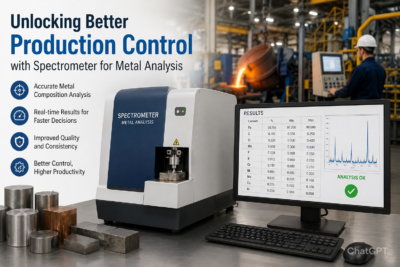
A Metal Analysis Spectrometer provides manufacturers with the ability to accurately determine the elemental composition of metals and alloys. This advanced technology helps businesses maintain quality standards, improve operational efficiency, and reduce costly production errors. From steel plants and foundries to engineering workshops and recycling facilities, spectrometers have become an important tool for modern industrial operations.
The Importance of Material Composition
Every metal alloy is designed to perform a specific function. The percentage of elements such as chromium, nickel, manganese, copper, and carbon directly affects the material’s mechanical and chemical properties.
If a metal contains incorrect elemental concentrations, it may lead to:
- Reduced strength
- Lower corrosion resistance
- Product performance issues
- Manufacturing defects
- Increased maintenance requirements
A Metal Analysis Spectrometer helps identify these variations before materials are used in production, allowing manufacturers to maintain high-quality standards.
How Metal Analysis Supports Manufacturing
Accurate material verification plays a key role in successful manufacturing operations. Spectrometer technology allows businesses to verify metal composition quickly and reliably.
This helps manufacturers:
Verify Raw Materials
Incoming materials can be tested before entering the production process.
Maintain Consistent Quality
Regular testing ensures that production materials remain within specification.
Improve Product Reliability
Verified materials contribute to better product performance and durability.
Reduce Production Risks
Material discrepancies can be identified before they affect manufacturing operations.
Applications Across Industrial Sectors
Steel and Alloy Production
Steel manufacturers use spectrometers to monitor alloy chemistry and maintain production consistency.
Foundry Operations
Foundries rely on accurate material analysis to control molten metal composition and improve casting quality.
Fabrication and Engineering
Engineering companies use Metal Analysis Spectrometer systems to verify materials before welding, machining, and assembly operations.
Automotive Manufacturing
Vehicle manufacturers require precise material control to ensure safety and long-term reliability.
Scrap Metal Recycling
Recycling facilities use spectrometers to identify alloy grades quickly and improve sorting efficiency.
Benefits of a Metal Analysis Spectrometer
Rapid Material Verification
Modern systems provide analytical results within seconds, helping manufacturers save time.
High Accuracy
Precise elemental analysis supports reliable quality control and material identification.
Better Process Control
Accurate material data contributes to more stable and efficient production processes.
Reduced Waste
Material issues can be detected early, helping minimize scrap generation and production losses.
Increased Customer Confidence
Consistent product quality strengthens customer trust and business reputation.
Quality Assurance Through Advanced Testing
Quality assurance requires reliable information at every stage of production. A Metal Analysis Spectrometer provides manufacturers with accurate data that supports inspection, verification, and compliance activities.
Businesses can use spectrometer analysis to:
- Verify supplier materials
- Monitor production quality
- Inspect finished products
- Maintain quality documentation
- Support certification requirements
This helps organizations build stronger quality management systems and maintain industry standards.
Improving Operational Efficiency
Manufacturing efficiency depends on making informed decisions quickly. Material-related issues can cause delays, increase costs, and disrupt production schedules.
A Metal Analysis Spectrometer helps improve efficiency by providing fast and accurate analytical results that support better decision-making.
Organizations that invest in advanced material verification technologies often experience:
- Lower operating costs
- Reduced downtime
- Improved productivity
- Better resource management
- Stronger production performance
Future of Metal Analysis Technology
The future of industrial testing is being shaped by automation, digitalization, and smart manufacturing practices. Spectrometer technology continues to evolve, offering enhanced analytical performance and greater integration with production systems.
Future advancements may include:
- Automated material verification
- Real-time quality monitoring
- Cloud-based reporting platforms
- Advanced production analytics
- Smart factory integration
These innovations will make Metal Analysis Spectrometer systems even more valuable for industrial operations.
Conclusion
Accurate material verification is essential for maintaining quality, productivity, and operational reliability. A Metal Analysis Spectrometer provides manufacturers with the information needed to verify metal composition, improve production consistency, and reduce manufacturing risks.
As industries continue to focus on higher quality standards and greater efficiency, spectrometer technology will remain a vital tool for achieving manufacturing excellence. Businesses that invest in advanced metal analysis solutions will be better positioned to improve performance, strengthen quality assurance programs, and support long-term growth.


