If you’re new to crafting with a Silhouette machine, one of the first questions you’ll encounter is:
Should I use Heat Transfer Vinyl (HTV) or Adhesive Vinyl?
At first glance, they may look similar. Both come in a wide range of colors, finishes, and styles. Both can be cut with Silhouette America’s cutting machines and customized using Silhouette Studio®. However, they serve very different purposes, and choosing the wrong one can lead to frustration, wasted materials, and disappointing results.
Whether you’re creating custom T-shirts, home décor, personalized gifts, decals, or business products, understanding the differences between HTV and adhesive vinyl is essential for crafting success.
In this guide, we’ll break down how each material works, where to use it, and how to decide which one is best for your next project.
Understanding the Silhouette Crafting Workflow
One of the reasons Silhouette is so popular among beginners and professional makers alike is its complete creative ecosystem.
The Silhouette experience includes:
- Silhouette cutting machines like the Cameo® and Portrait®
- Silhouette Studio®, where designs are created and customized
- A wide range of compatible materials, including vinyl
- Access to thousands of designs through the Silhouette Design Store
Once you’ve chosen your design, the next important decision is selecting the right material for the job.
That’s where understanding vinyl becomes crucial.
What Is Adhesive Vinyl?
Adhesive vinyl is a pressure-sensitive material with a sticky backing.
Think of it as a durable sticker material that can be cut into shapes, lettering, or designs and then applied directly to a surface.
How It Works
- Cut your design with your Silhouette machine
- Weed away excess vinyl
- Use transfer tape to move the design
- Apply it to the desired surface
No heat is required.
Common Uses for Adhesive Vinyl
Adhesive vinyl is ideal for hard, smooth surfaces.
Popular Projects Include:
- Water bottles
- Tumblers
- Mugs
- Wall decals
- Window graphics
- Storage labels
- Home décor signs
- Car decals
- Business signage
Because it’s durable and weather-resistant, adhesive vinyl is perfect for projects that need long-lasting results.
What Is Heat Transfer Vinyl (HTV)?
Heat Transfer Vinyl, often called HTV or iron-on vinyl, is specifically designed for fabric and textile applications.
Unlike adhesive vinyl, HTV uses heat and pressure to permanently bond to a material.
How It Works
- Cut your design
- Weed away excess material
- Place the design onto fabric
- Apply heat using a heat press or iron
- Peel away the carrier sheet
The heat activates the adhesive layer and permanently attaches the design to the fabric.
Common Uses for Heat Transfer Vinyl
HTV is designed for soft materials.
Popular Projects Include:
- T-shirts
- Sweatshirts
- Hoodies
- Tote bags
- Aprons
- Pillow covers
- Baby clothing
- Team apparel
- Fabric gifts
If your project involves fabric, HTV is usually the correct choice.
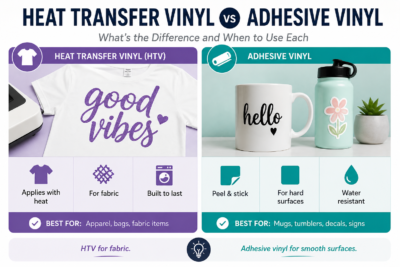
The Biggest Difference: Surface Type
The easiest way to remember the difference is:
Adhesive Vinyl
Sticks to hard surfaces
Heat Transfer Vinyl
Bonds to fabric using heat
This simple rule helps avoid most beginner mistakes.
When to Use Adhesive Vinyl
Choose adhesive vinyl when your project involves:
Hard Surfaces
- Glass
- Plastic
- Acrylic
- Metal
- Painted wood
- Ceramic
Examples
- Pantry labels
- Custom tumblers
- Window decals
- Business logos
- Personalized gifts
Adhesive vinyl works best when applied to clean, smooth surfaces.
When to Use Heat Transfer Vinyl
Choose HTV when your project involves:
Fabric or Textiles
- Cotton
- Polyester
- Canvas
- Fabric blends
Examples
- Family reunion shirts
- School spirit wear
- Personalized tote bags
- Baby onesies
- Sports apparel
HTV creates a durable bond that can withstand regular wear and washing.
How to Tell Them Apart
New crafters often confuse the two materials.
Here’s a simple way to identify them.
Adhesive Vinyl
Features:
- Sticky backing
- Requires transfer tape
- No heat needed
- Applied directly to a surface
Backing Appearance:
Usually paper-backed with exposed vinyl on top.
Heat Transfer Vinyl
Features:
- Heat activated
- Comes attached to a clear carrier sheet
- Applied face-up
- No transfer tape needed
Backing Appearance:
Clear plastic carrier sheet on top.
Common Beginner Mistakes
One of the biggest frustrations for new crafters is accidentally using the wrong vinyl.
Mistake #1: Using Adhesive Vinyl on a T-Shirt
Adhesive vinyl will not hold up on fabric.
It may:
- Peel quickly
- Crack
- Lose adhesion after washing
Always use HTV for apparel projects.
Mistake #2: Using HTV on a Tumbler
HTV requires heat and is not intended for hard surfaces.
Using it on:
- Mugs
- Tumblers
- Signs
Will result in poor adhesion and durability.
Mistake #3: Forgetting to Mirror HTV Designs
When cutting HTV, designs must usually be mirrored before cutting.
This is because the material is cut from the backside.
Silhouette Studio® includes settings to help make this process simple.
Popular HTV Finishes
Modern HTV comes in many styles.
Popular Options:
- Matte
- Glossy
- Glitter
- Metallic
- Puff HTV
- Reflective HTV
- Patterned HTV
These finishes allow creators to make unique apparel and accessories.
Popular Adhesive Vinyl Finishes
Adhesive vinyl is equally versatile.
Popular Options:
- Permanent vinyl
- Removable vinyl
- Glossy
- Matte
- Holographic
- Metallic
- Frosted
- Transparent
This variety makes adhesive vinyl a favorite for personalization projects.
How Silhouette Studio® Makes Vinyl Projects Easier
Silhouette Studio® helps users prepare vinyl projects by allowing them to:
- Resize designs
- Add names and personalization
- Mirror HTV designs
- Optimize cut settings
- Organize multi-color layers
This makes it easy to move from idea to finished project regardless of which vinyl you choose.
Using the Silhouette Design Store for Vinyl Projects
The Silhouette Design Store is an excellent source of vinyl-friendly designs.
You’ll find:
- Quote designs
- Monograms
- Seasonal graphics
- Business logos
- Home décor projects
- Apparel-ready artwork
Because the files are optimized for Silhouette machines, they help reduce setup time and improve crafting success.
Which Vinyl Is Better for Beginners?
The answer depends on the type of projects you want to create.
Choose Adhesive Vinyl If You Want To:
- Make labels
- Decorate tumblers
- Create decals
- Personalize hard surfaces
Choose HTV If You Want To:
- Make custom shirts
- Create fabric gifts
- Personalize tote bags
- Design wearable products
Many crafters eventually use both because they serve different purposes.
A Smart Starter Strategy
If you’re just beginning your crafting journey, consider purchasing:
- Basic permanent adhesive vinyl
- Basic heat transfer vinyl
- A few designs from the Silhouette Design Store
This gives you the flexibility to experiment with both project types and discover what you enjoy most.
Final Thoughts: Choosing the Right Vinyl for Every Project
Understanding the difference between Heat Transfer Vinyl and Adhesive Vinyl is one of the most important skills a Silhouette crafter can learn.
While the materials may look similar, they are designed for completely different applications:
- Adhesive Vinyl = Hard Surfaces
- Heat Transfer Vinyl = Fabric & Textiles
With the right material, a quality design, and the power of Silhouette America’s cutting machines, you can create everything from custom apparel and personalized gifts to business branding and home décor.
The more you understand your materials, the more successful your projects will be.
And once you master both HTV and adhesive vinyl, you’ll unlock an entirely new world of creative possibilities.


